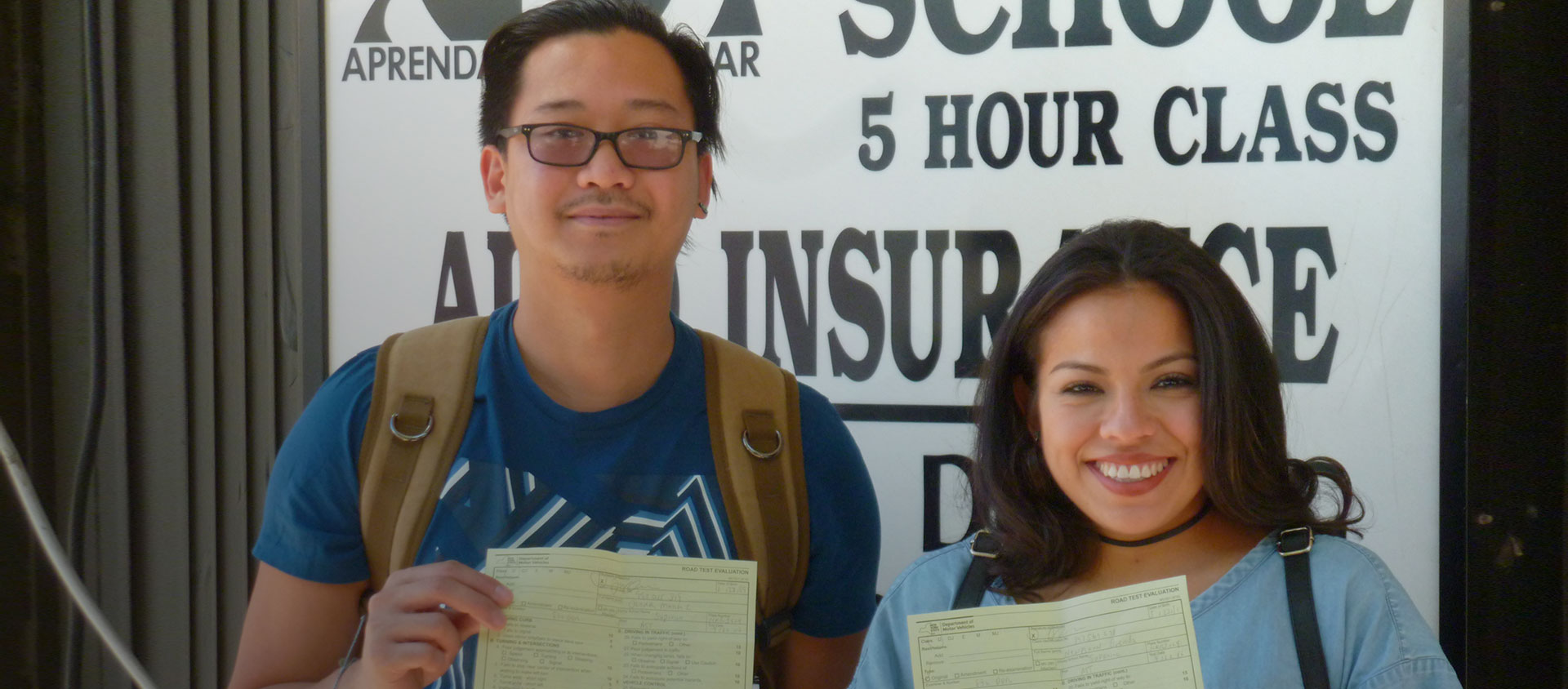

Taking the New York State road test can feel like a mystery. You get in the car with a stranger who holds your driving future in their hands, they give a few quiet directions, and then deliver a verdict. But what is actually going through their mind? What are they scribbling on that scorecard? Understanding the examiner’s perspective is one of the most powerful tools you can have for passing your test. They aren’t looking for perfection, but they are looking for competence. They need to be confident that you can operate a vehicle safely and responsibly on your own.
The NYS road test is a standardized evaluation. Every examiner across the state, whether in Queens or Buffalo, is grading you on the same set of core driving competencies. This guide will pull back the curtain and detail exactly what those competencies are. We’ll break down the examiner’s checklist, from fundamental vehicle control to the subtle habits of a truly aware driver. By understanding what they look for, you can focus your practice, calm your nerves, and demonstrate that you have what it takes to earn your driver’s license.
The Scoring System: Points and Automatic Fails
Before diving into the specific skills, it’s crucial to understand how the test is graded. The examiner uses a point-based system. For minor errors, points are deducted from a starting score. You can accumulate up to 30 points in deductions and still pass the test. Making more than 30 points worth of errors results in a failure.
However, certain actions are considered so dangerous that they result in an automatic failure, regardless of your point total. These are “critical driving errors.” This system means that while a single, small mistake might not cost you your license, a serious lapse in judgment will. The entire evaluation is designed to answer one fundamental question: Are you a safe driver?
Core Competency 1: Vehicle Control
From the moment you start the car, the examiner is assessing your ability to handle the vehicle smoothly and confidently. Jerky movements, uncertain steering, or poor speed management are immediate red flags that you lack fundamental control.
Steering and Turning
The examiner wants to see that you have full command of the car’s direction.
- Proper Hand Position: While the old “10 and 2” is still acceptable, many instructors now teach “9 and 3” or “8 and 4” for better airbag safety. What’s most important is that you keep both hands on the wheel unless you are performing a necessary function like shifting gears (which is rare in the automatic cars used for most tests).
- Smooth Steering Technique: Use the “hand-over-hand” or “push-pull” method for turns. Avoid letting the wheel slide through your fingers to straighten out. This demonstrates a lack of control. After completing a turn, you should actively and smoothly guide the wheel back to the center.
- Turning Execution: When making a turn, you should slow down before you enter the turn, not while you’re in the middle of it. You must also finish the turn in the correct lane. For a right turn, you enter the rightmost lane. For a left turn onto a multi-lane road, you should enter the lane closest to the center line and then signal to move right if needed.
Acceleration and Braking
Your ability to manage the car’s momentum is a primary indicator of your skill.
- Smooth Starts: When you accelerate from a stop, it should be gentle and gradual. Pressing the gas pedal too hard, causing the car to lurch forward, shows inexperience.
- Controlled Stops: Abrupt, last-second braking is a major sign of poor planning and observation. The examiner expects you to see a stop sign or red light well in advance and begin to apply the brake early for a smooth, controlled stop. You should come to a complete stop before the white stop line, not on it or past it.
- Speed Management: This isn’t just about avoiding speeding. Driving significantly under the speed limit can also cost you points for impeding traffic flow. You are expected to keep up with the flow of traffic while staying at or below the posted speed limit (typically 25 mph in Queens residential areas unless posted otherwise).
Developing this level of control takes time. It’s built through hours of practice, which is why professional driving lessons are so valuable. An instructor can immediately spot and correct issues with your steering or braking, building the right muscle memory from the start.
Core Competency 2: Observation and Spatial Awareness
A safe driver is an aware driver. The examiner will spend the entire test watching your head and eye movements to ensure you are constantly scanning your environment and are aware of what’s happening around your vehicle. This is arguably the most important category, as poor observation leads to most driving errors.
Constant Scanning
The examiner needs to see physical proof that you are looking around.
- The 5-8 Second Rule: You should be checking your rearview and side mirrors every 5 to 8 seconds. This shouldn’t be a quick, useless glance. You need to actually register what is behind and beside you.
- Looking Ahead: Don’t just focus on the car directly in front of you. Good drivers look 12-15 seconds down the road to anticipate potential hazards, like a stale green light that might turn yellow or a pedestrian preparing to cross the street.
- Intersections: As you approach any intersection (even with a green light), you must scan left, then right, then left again before proceeding through. The examiner will be watching your head movement to confirm you are doing this.
Blind Spot Checks
This is a critical safety habit that is frequently missed by new drivers. Your mirrors do not show you everything.
- The Head Turn: Any time you intend to move your vehicle laterally—for a lane change, pulling away from the curb, or even moving slightly to avoid a pothole—you must physically turn your head to look over your shoulder into the blind spot. This is non-negotiable.
- Leaving the Curb: The test begins the moment you intend to move. Before pulling out from the curb, you must follow the full “SMO” sequence: Signal, check Mirrors, and look Over your shoulder. Failing to check your blind spot at the very start is a common and easily avoidable error.
Maintaining a Safe “Space Cushion”
The examiner is evaluating your ability to manage the space around your vehicle to give yourself time to react.
- Following Distance: The “3-second rule” is the standard. As the vehicle in front of you passes a fixed object (a sign, a tree), you should be able to count “one-one-thousand, two-one-thousand, three-one-thousand” before your car passes the same object. Any less is tailgating, a surefire way to lose points.
- Stopping Position: When stopping behind another vehicle, you should be able to see their rear tires touching the pavement. This ensures you have enough room to maneuver around them if their vehicle breaks down.
These observation skills are a major focus of the mandatory 5-Hour Pre-Licensing Class, which covers the principles of seeing, thinking, and responding to traffic situations.
Core Competency 3: Communication and Adherence to Law
Driving is a cooperative activity. You must clearly communicate your intentions to other road users and obey all traffic laws, signs, and signals. The examiner will penalize any failure to do so, with serious infractions resulting in an automatic fail.
Signaling
Your turn signals are your primary method of communication.
- Signal Every Time: You must signal for every turn, every lane change, and every time you pull into or away from the curb. There are no exceptions.
- Proper Timing: Signal your intention at least 100 feet before your maneuver. Signaling too early can confuse other drivers, and signaling too late defeats the purpose.
- Canceling Your Signal: Remember to ensure your signal turns off after your maneuver is complete. Driving with a forgotten, blinking signal is a sign of a distracted or unaware driver.
Obeying Signs and Signals
This is a straightforward but critical part of the test.
- Stop Signs: You must come to a full and complete stop behind the white line. A “rolling stop” where the wheels never cease moving is an automatic failure. After stopping, you must yield the right-of-way to cross-traffic and pedestrians before proceeding.
- Red Lights: The rule is the same as for a stop sign: a full, complete stop behind the line. You may only turn right on red where it is explicitly permitted by a sign, and only after coming to a full stop and yielding to all other traffic and pedestrians.
- Speed Limit Signs: You must know and obey the speed limit at all times.
- Other Signage: Pay close attention to signs like “No Turn on Red,” “One Way,” “Do Not Enter,” and “Yield.” Disobeying a regulatory sign is often a critical error.
Right-of-Way
Understanding and correctly yielding the right-of-way is a major test of your knowledge and safety.
- Pedestrians: Pedestrians in a crosswalk always have the right-of-way. You must stop and wait for them to clear the roadway. Even if a person is crossing where there isn’t a crosswalk, the safe and correct action is to yield to them.
- Four-Way Stops: The rule is “first to arrive, first to go.” If two vehicles arrive at the same time, the vehicle on the right has the right-of-way.
- Uncontrolled Intersections: At an intersection with no signs or signals, you must yield to any vehicle already in the intersection and to vehicles approaching from your right.
Many of these laws are covered not only in the pre-licensing class but are also reinforced in a Defensive Driving course, which trains you to anticipate the actions of others and prioritize safety above all else.
Core Competency 4: Executing Specific Maneuvers
During the test, the examiner will ask you to perform several specific maneuvers designed to test your precision and control in common, and sometimes tricky, situations.
The Three-Point Turn (K-Turn)
This tests your ability to turn the vehicle around in a narrow space. The examiner is looking for:
- Safety and Observation: You must signal and check for traffic before each step of the turn.
- Efficiency: The maneuver should be completed in three distinct movements (forward left, backward right, forward left). Taking too many extra movements will lose you points.
- Control: You should not touch or climb the curb at any point. Hitting the curb can be a major point deduction or even a failure, depending on the severity.
Parallel Parking
This is the most infamous part of the test, but examiners are simply looking for a safe and reasonably efficient park.
- Correct Setup: You must pull up parallel to the front car, about 2-3 feet away.
- Observation: You must look over your shoulder through the rear window while backing up. Only relying on mirrors is a mistake.
- Proper Angle: You should back in at a roughly 45-degree angle until your front bumper clears the rear bumper of the car in front.
- Final Position: The vehicle should be reasonably parallel to and within 12-18 inches of the curb. You are not expected to be perfectly aligned. Lightly touching the curb is usually a small point deduction; aggressively hitting it is a major error.
- Number of Moves: You should be able to complete the park in a few simple movements. Taking too long or making excessive adjustments will lose you points.
Our instructors have helped countless students master this maneuver. As our testimonials often mention, having a simple, repeatable technique is the key to conquering parking anxiety.
Pulling Over and Securing the Vehicle
At the end of the test, the examiner will ask you to pull over and park. They are still evaluating you. You must signal to the side, pull over smoothly, and once stopped, you must put the car in park and engage the parking brake before turning off the engine.
Mindset and Attitude: The Intangibles
While not an official category on the scoresheet, your apparent attitude and confidence play a role. An examiner who sees a calm, confident, and serious driver is more likely to give them the benefit of the doubt on a very minor error.
- Confidence, Not Cockiness: Handle the car with a steady hand. Don’t second-guess every move. You have practiced for this. Trust your training.
- Handling Errors: If you make a mistake, like a slightly wide turn, don’t get flustered. Acknowledge it internally, take a deep breath, and focus on the next task. Panicking after a small error is what leads to bigger, test-failing errors.
- Listen Carefully: Pay close attention to the examiner’s instructions. They will be clear and simple, like “take the next left” or “pull over here.” If you are unsure, it is acceptable to ask for clarification, for example, “Do you mean this street or the next one?” It shows you are engaged and want to perform the correct action.
Passing the NYS road test comes down to proving you are a safe, aware, and law-abiding driver. The examiner is not your adversary; they are a public safety official with a checklist. By understanding that checklist and focusing your practice on vehicle control, constant observation, clear communication, and perfect adherence to the law, you can confidently demonstrate your readiness for the road.
If you feel you need more practice on any of the skills mentioned here, or if you want to experience a simulated road test with a professional who knows exactly what examiners look for, we encourage you to contact us. We are here to help you succeed.
Learn to Drive with Superior Driving School
We believe these lessons can last a lifetime and know they result in safer roads and save lives! We have been a trusted Queens NY driving school for more than two decades!
Contact Us