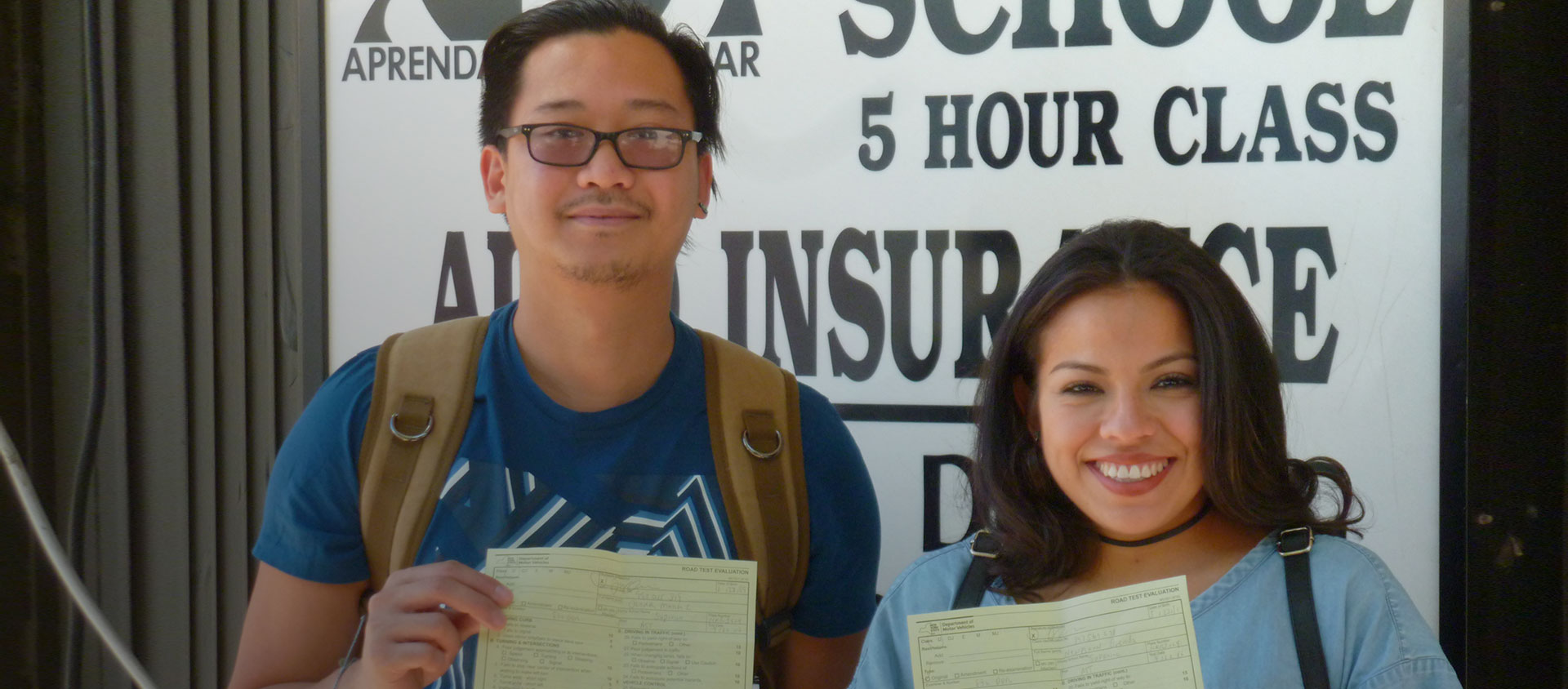

The New York State road test is the final hurdle on the journey to getting your driver’s license. While you may have spent countless hours practicing, the pressure of the test can cause even well-prepared students to make critical errors. Understanding the most common mistakes is the first step toward avoiding them. It is not always the most difficult maneuvers that trip people up, but often small, fundamental lapses in judgment or observation.
This guide will break down the top 10 reasons people fail the NYS road test. We will explore why these specific errors are considered so serious and provide clear, actionable tips on how to avoid them. By learning from the mistakes of others, you can ensure that on your test day, you demonstrate the safe, confident driving skills the examiner needs to see.
1. Rolling Stops and Improper Stopping
This is arguably the most common and easily avoidable critical error. A “rolling stop,” where your wheels never completely cease their rotation, is an automatic failure. Examiners are strict about this because it demonstrates a fundamental misunderstanding of a stop sign’s purpose.
Why It’s a Fail Point
A stop sign means stop—completely. Failing to do so puts pedestrians, cyclists, and other vehicles at risk. It signals to the examiner that you may not take traffic control devices seriously.
How to Avoid It
- Stop Behind the Line: Your front bumper must stop before the thick white line painted on the road. If there is no line, stop before the crosswalk. If there is neither, stop at a point where you have a clear view of intersecting traffic without entering the intersection.
- Feel the “Tug”: A true stop has a distinct physical feeling. As you come to a full stop, you will feel a slight tug or settlement in the car as its momentum ceases. Practice feeling for this “settling” in your driving lessons until it becomes second nature.
- Count to Three: A good habit is to count “one-one-thousand, two-one-thousand, three-one-thousand” in your head after stopping. This ensures you have truly stopped and gives you a moment to properly scan the intersection before proceeding.
- Stop in the Right Place: When stopping behind another vehicle, make sure you can see their rear tires touching the pavement. This creates a safe buffer zone.
2. Lack of Observation and Scanning
Driving safely is not just about controlling the car; it’s about being constantly aware of your surroundings. Examiners will be watching your head and eye movements throughout the entire test. A driver who stares straight ahead is an unsafe driver.
Why It’s a Fail Point
Failing to scan intersections, check mirrors, or look over your shoulder for blind spots means you are driving with incomplete information. This is how collisions happen. Points are deducted for each instance of failed observation, and they add up quickly.
How to Avoid It
- Exaggerate Your Head Movements: In the test, make your scanning obvious. When you check your rearview mirror, side mirrors, or blind spots, turn your head enough for the examiner to see you do it.
- The “Left-Right-Left” Rule: Before entering any intersection, even on a green light, physically turn your head and scan left, then right, then left again.
- The 5-8 Second Mirror Check: Make it a habit to glance at your mirrors every 5 to 8 seconds. This keeps you aware of what is happening behind and beside you.
- The SMOG Method for Lateral Moves: Before any lateral movement (lane change, pulling from a curb), you must use the “Signal, Mirror, Over-the-shoulder, Go” technique. The “over-the-shoulder” head check into your blind spot is non-negotiable. This critical safety step is emphasized in the state-mandated 5-Hour Pre-Licensing Class.
3. Failure to Yield the Right-of-Way
Understanding and correctly applying right-of-way rules is a cornerstone of safe, cooperative driving. An examiner must be confident that you can navigate intersections and interact with other road users predictably and safely. Any action that forces another driver or a pedestrian to stop or swerve to avoid hitting you is a critical error.
Why It’s a Fail Point
Violating another’s right-of-way is a direct cause of accidents. It shows a dangerous lack of understanding of basic traffic laws and is an immediate danger to public safety, resulting in an automatic failure.
How to Avoid It
- Pedestrians First, Always: Pedestrians in a crosswalk have the absolute right-of-way. You must stop and wait for them to clear your vehicle’s path.
- Master the 4-Way Stop: The rule is simple: first to arrive is first to go. If two cars arrive simultaneously, the car on the right has the right-of-way. Never assume the other driver will let you go. Make eye contact if possible.
- Uncontrolled Intersections: At an intersection with no signs or signals, yield to any traffic already in the intersection and to any car approaching from your right.
- Making Left Turns: When turning left, you must yield to all oncoming traffic. Wait for a safe gap before making your turn. Do not “creep” into the intersection to the point where you block traffic.
4. Improper Lane Changes
Changing lanes is a multi-step process that requires precision and awareness. It is a common area for point deductions because students often miss one or more of the critical steps.
Why It’s a Fail Point
An improper lane change can cause a sideswipe collision or cut another driver off. It indicates poor observation and a lack of spatial awareness. Too many points lost here, or one dangerously executed lane change, can lead to failure.
How to Avoid It
- Always Use the SMOG Method: As mentioned before, Signal, Mirror, Over-the-shoulder, Go. Every single time.
- Signal in Advance: Activate your turn signal at least 100 feet before you intend to change lanes. This gives other drivers ample warning of your intentions.
- Maintain Your Speed: Do not slow down significantly before or during a lane change on a highway or busy road. Maintain your speed to match the flow of traffic in the lane you are entering.
- Smooth Movement: The lane change itself should be a smooth, gradual drift into the next lane. Do not jerk the wheel.
- Cancel Your Signal: Remember to turn off your signal once you are fully established in the new lane.
5. Striking or Climbing the Curb
Whether it’s during a three-point turn, parallel parking, or simply making a right turn, hitting the curb is a sign of poor vehicle control and spatial awareness.
Why It’s a Fail Point
While a light touch during a parking maneuver might only be a small point deduction, hitting the curb with force can be an automatic failure. It is considered a loss of control of the vehicle. If you climb the curb, you have effectively left the roadway, which is a definite fail.
How to Avoid It
- Practice Parking Reference Points: The key to avoiding the curb while parallel parking is knowing your reference points. Our instructors teach a proven, step-by-step method that our students praise in their testimonials. Practice this method until it is automatic.
- Use Your Mirrors: Your side mirrors are essential tools. Tilt your passenger-side mirror down slightly before you begin parallel parking. This will give you a clear view of the curb and your distance from it.
- Go Slowly: All precision maneuvers should be done at a snail’s pace. The slower you go, the more time you have to make small, precise steering adjustments.
- Wide Right Turns: To avoid hitting the curb on a right turn, track a path that allows your rear passenger-side wheel to clear the corner. Don’t cut the corner too sharply.
6. Poor Speed Control
Your management of the car’s speed tells the examiner a lot about your confidence and awareness. This isn’t just about speeding; driving too slowly is also a problem.
Why It’s a Fail Point
Speeding is illegal and dangerous, and it can be an automatic fail. Driving excessively slowly, however, can impede the flow of traffic and is also considered unsafe. It shows a lack of confidence and can cause frustration and unpredictable actions from other drivers.
How to Avoid It
- Know the Unposted Limit: In New York City, the default speed limit is 25 mph unless a sign posts a different speed. Assume it’s 25 mph until you see otherwise.
- Drive with the Flow: Try to keep pace with the surrounding traffic as long as it is moving at a legal and safe speed.
- Adjust for Conditions: Slow down for sharp curves, poor weather, or areas with heavy pedestrian traffic. This shows the examiner you are an adaptive, thinking driver. A Defensive Driving course is excellent for honing these risk-assessment skills.
- Brake Smoothly: Avoid “slamming” on the brakes. You should see slowdowns ahead and be able to decelerate smoothly and gradually.
7. Following Too Closely (Tailgating)
Maintaining a safe “space cushion” around your vehicle is a fundamental principle of defensive driving. Tailgating gives you no time to react if the car in front of you stops suddenly.
Why It’s a Fail Point
Tailgating is an aggressive and dangerous habit. The examiner will deduct points every time they observe you following too closely, and if it’s egregious, it can contribute to a failure.
How to Avoid It
- Use the 3-Second Rule: This is the golden rule of following distance. As the car in front of you passes a fixed object (like a signpost or tree), start counting: “one-one-thousand, two-one-thousand, three-one-thousand.” If you pass that same object before you finish counting, you are too close.
- Increase Distance in Bad Weather: In rain, snow, or fog, increase your following distance to 4 or 5 seconds.
- Look Ahead: Don’t just watch the car in front of you. Look past it to see what traffic is doing two or three cars ahead. This gives you even more time to react and brake smoothly.
8. Incomplete or Inefficient Three-Point Turn
The three-point turn (or K-turn) is a direct test of your vehicle control in a confined space. Examiners look for safety, precision, and efficiency.
Why It’s a Fail Point
Taking too many steps (e.g., a five-point turn), hitting the curb, or failing to observe for traffic at each step of the maneuver will lead to significant point deductions.
How to Avoid It
- Observe, Observe, Observe: Before you begin the turn and before each change of direction, you must signal and check for traffic in all directions.
- Full Wheel Rotation: To make the turn efficient, turn the steering wheel all the way in the desired direction before you start moving.
- Look Out the Back: When reversing, you must turn and look over your right shoulder through the rear window. Do not rely solely on your mirrors. This is a critical safety check.
9. Lack of Steering Control
How you handle the steering wheel shows the examiner how comfortable and in command you are.
Why It’s a Fail Point
Letting the wheel slide through your hands after a turn, driving for extended periods with one hand, or making jerky, erratic steering movements are all signs of an amateur driver and will cost you points.
How to Avoid It
- Use Hand-Over-Hand or Push-Pull: Practice the correct steering methods until they are smooth and natural.
- Maintain Both Hands on the Wheel: Keep both hands on the wheel at all times, preferably at the “9 and 3” or “8 and 4” positions.
- Actively Straighten the Wheel: After a turn, don’t just let go of the wheel. Actively guide it back to the center position for a smooth and controlled exit from the turn.
10. Nervous Hesitation
While nerves are normal, allowing them to cause excessive hesitation can lead to a failing score. This often manifests as being overly cautious to the point of being unpredictable or impeding traffic.
Why It’s a Fail Point
A driver who is too hesitant is not a confident or predictable driver. Refusing to take a safe, available gap in traffic, stopping unnecessarily at a green light, or driving 10 mph in a 25 mph zone can all be marked as errors.
How to Avoid It
- Preparation Builds Confidence: The best cure for hesitation is practice. The more you’ve practiced, the more you can trust your judgment. Booking a final “brush-up” driving lesson shortly before your test can be a huge confidence booster.
- Trust Your Gut: You’ve been trained to recognize a safe gap. When you see one, take it decisively (but safely). Don’t second-guess yourself.
- Focus on Action: If you feel yourself freezing up, focus on the next required action. Is it a mirror check? A signal? A head turn? Breaking the situation down into small, manageable steps can help you move forward.
Passing your road test is an achievable goal. By studying these common fail points and diligently practicing the correct techniques, you can avoid the simple mistakes that derail many applicants. The examiner is not looking for a race car driver; they are looking for a safe, predictable, and aware member of the driving community.
If you read this list and feel you need more work in certain areas, that’s a positive sign of self-awareness. Contact us to schedule lessons focused specifically on these problem areas. We’re here to help you build the skills and confidence to pass your test with flying colors.
Learn to Drive with Superior Driving School
We believe these lessons can last a lifetime and know they result in safer roads and save lives! We have been a trusted Queens NY driving school for more than two decades!
Contact Us