You’ve prepared for weeks, maybe even months. You’ve practiced your three-point turn until it’s second nature and parallel parked more times than you can count. You’ve completed your 5-hour pre-licensing class and feel ready. But on the morning of your road test, you look out the window and see pouring rain, a blanket of fresh snow, or feel an oppressive wave of heat. It’s natural to feel a surge of panic. Can you even take the test in this weather? How will it affect your performance?
While adverse weather adds a layer of complexity to your road test, it doesn’t automatically mean failure. In fact, demonstrating your ability to drive safely in challenging conditions can impress an examiner. The key is to be prepared. Understanding how rain, snow, and extreme heat affect your vehicle and the road is the first step. The second is knowing the specific techniques and adjustments needed to navigate these conditions safely and confidently. This guide will provide detailed tips for handling whatever Mother Nature throws at you on test day, ensuring you can prove you’re a capable driver, no matter the forecast.
The Big Question: Will the DMV Cancel My Road Test?
Before diving into driving techniques, let’s address the most immediate concern: cancellation. The Department of Motor Vehicles (DMV) prioritizes safety above all else. Road tests are generally canceled only in severe weather conditions that make driving exceptionally hazardous.
- Heavy Snow/Blizzards: A light dusting of snow is unlikely to cause a cancellation. However, a major snowstorm with low visibility and unplowed roads will almost certainly lead to postponements.
- Icy Conditions: Widespread black ice or freezing rain often results in cancellations, as these conditions are dangerous even for experienced drivers.
- Severe Thunderstorms/Flooding: Torrential rain that causes significant flooding or includes high winds may lead to tests being called off.
- Extreme Fog: Very dense fog that severely limits visibility can also be a reason for cancellation.
In most cases, if the roads are open and general traffic is moving, the tests will proceed. Always check the official DMV website or call your local office if you are unsure about the status of your test. If your test is managed through a driving school, they will typically notify you of any cancellations. Should you ever need to reschedule or have questions about your appointment, feel free to contact us for assistance. Assuming the test goes on, your next step is to prepare for the specific conditions.
Driving in the Rain: Master the Wet Roads
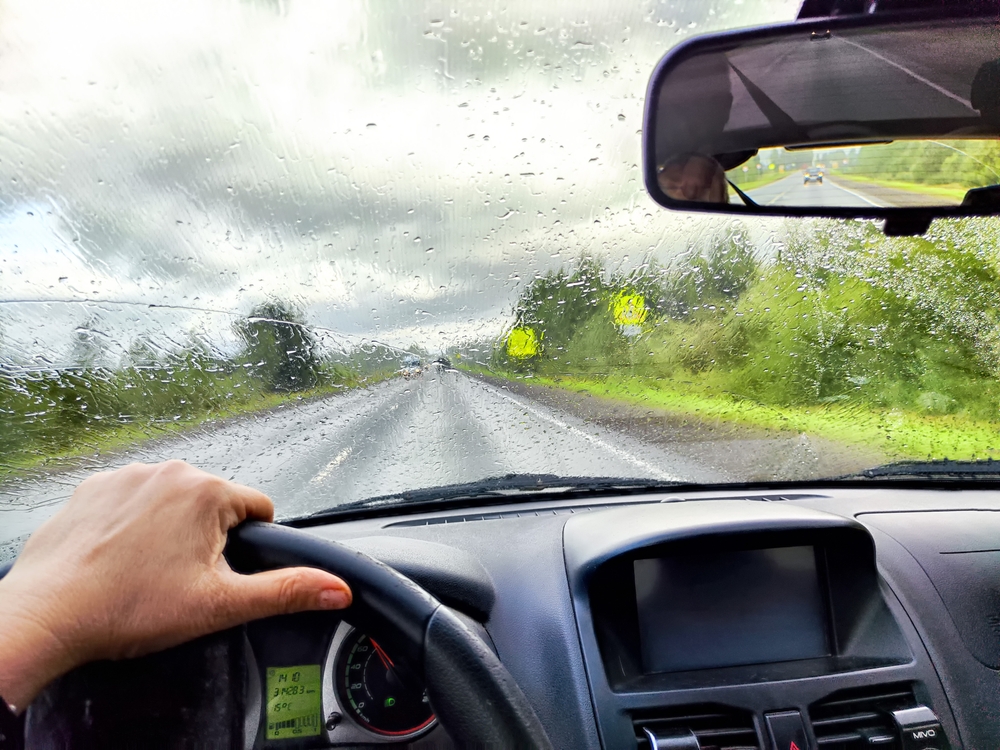
Rain is one of the most common weather challenges you might face. While it may seem straightforward, wet roads introduce risks like reduced visibility, decreased traction, and the potential for hydroplaning. An examiner will be watching closely to see how you adapt.
Vehicle Preparation for a Rainy Day Test
Before you even start the car, a few simple checks can make a big difference.
- Wiper Blades: Ensure your windshield wipers are in excellent condition. They should clear water smoothly without streaking or squeaking. If they are old or worn, replace them.
- Tire Tread and Pressure: Proper tire tread is crucial for grip on wet surfaces. Check that your tires are not bald and are inflated to the recommended pressure. Underinflated tires can increase the risk of hydroplaning.
- Defroster/Air Conditioning: Rain can cause your windows to fog up instantly. Know how to operate your car’s defroster and A/C. The A/C helps pull moisture from the air, clearing windows faster. Practice using these controls so you can activate them quickly without taking your eyes off the road.
Key Techniques for Driving in the Rain
Your examiner wants to see that you are proactive, not reactive. Adjust your driving style before a problem arises.
1. Reduce Your Speed
This is the single most important adjustment. The posted speed limit is for ideal conditions. In rain, you must drive slower. Reducing your speed gives you more time to react and increases your tires’ ability to grip the road. A good rule of thumb is to reduce your speed by about one-third. For example, in a 30 mph zone, aim for around 20 mph, depending on the intensity of the rain.
2. Increase Your Following Distance
Wet roads significantly increase your braking distance. The “three-second rule” for following distance should be doubled to at least six seconds in the rain. To measure this, watch the vehicle ahead of you pass a fixed object (like a signpost). Then, count the seconds it takes for your vehicle to reach the same object. If it’s less than six, you’re too close. An examiner will notice and appreciate this safe practice. This is a core principle taught in any good defensive driving course.
3. Ensure Maximum Visibility
Your ability to see and be seen is dramatically reduced in the rain.
- Headlights: Turn on your low-beam headlights. This is often a legal requirement in rainy weather, but more importantly, it makes your vehicle much more visible to other drivers and pedestrians.
- Windshield Wipers and Defroster: As mentioned, use your wipers as needed and be ready to use the defroster to prevent your windows from fogging. Don’t let fogged windows become a distraction.
4. Brake and Steer Smoothly
Avoid sudden movements. Brake early and gently. Slamming on the brakes can cause your wheels to lock up and the car to skid. Similarly, make smooth, deliberate turns. Jerking the steering wheel can cause a loss of traction. These skills are perfected during professional driving lessons, where instructors emphasize fluid control of the vehicle.
5. Be Wary of Puddles and Hydroplaning
Hydroplaning occurs when a layer of water builds up between your tires and the road surface, causing a loss of traction and control. It can happen at speeds as low as 35 mph.
- Avoid Standing Water: Try to steer around large puddles when it is safe to do so. Puddles can hide deep potholes that could damage your car or cause you to lose control.
- What to Do if You Hydroplane: If you feel the car start to hydroplane (a light or disconnected feeling in the steering), do not panic. Do not brake or turn the wheel. Ease your foot off the accelerator and keep the steering wheel straight. The car will slow down, and the tires should regain contact with the road.
An examiner will be impressed by a driver who demonstrates awareness of these risks and handles them with calm precision.
Driving in Snow: Proving Your Cool Under Pressure
A snowy road test can be the most intimidating scenario. It requires an even higher level of caution and skill. However, if you are properly prepared, you can demonstrate a superior level of driver competence.
Vehicle Preparation for a Snowy Test
Preparation is non-negotiable in snow.
- Snow Tires or All-Season Tires: Ensure your vehicle has appropriate tires with deep tread. Snow tires are ideal, but good all-season tires can be sufficient in light snow.
- Clear All Snow and Ice: Before the examiner even approaches the car, make sure it is completely cleared of snow and ice. This means the roof, hood, trunk, all windows, all mirrors, and all lights. Driving with snow on your car is unsafe and can result in an automatic failure.
- Check Your Fluids: Make sure your windshield washer fluid is rated for freezing temperatures.
Essential Techniques for Driving in Snow
Driving in snow is a masterclass in gentle, deliberate action.
1. Drastically Reduce Your Speed
Your speed in snow should be significantly lower than in rain. On some snowy residential streets, you may be driving as slow as 10-15 mph. Go as slow as you need to in order to maintain full control of the vehicle.
2. Leave an Enormous Following Distance
Your stopping distance on snow and ice can be up to 10 times longer than on a dry road. Your following distance should be increased to 8-10 seconds or more. This buffer of space is your biggest safety tool.
3. Master Gentle Acceleration and Braking
The key to avoiding skids is smoothness.
- Accelerate Slowly: Apply pressure to the gas pedal very gently to avoid spinning your wheels. If your wheels do start to spin, ease off the accelerator until they regain traction.
- Brake Extremely Early: Anticipate stops far in advance. On a snowy road, you should begin braking for a stop sign or red light much earlier than you would on a dry road. Use slow, steady pressure on the brake pedal.
4. Look and Steer Where You Want to Go
This is a critical rule for skid control. If your car begins to skid, your instinct might be to look at the obstacle you’re afraid of hitting. You must fight this urge. Look toward your intended path—the open space where you want the car to go—and gently steer in that direction. This is a skill that many students find invaluable to practice during professional driving lessons.
5. Understand Skid Correction
There are two main types of skids:
- Front-Wheel Skid: The front of the car continues to go straight even when you turn the wheel. To correct this, ease off the accelerator and allow the front wheels to regain traction. Avoid braking hard.
- Rear-Wheel Skid: The back of the car fishtails to one side. To correct this, ease off the gas and steer gently in the direction you want the front of the car to go (this is the same direction as the skid).
An examiner does not expect you to be a stunt driver, but they do want to see that you can remain calm and make the correct initial inputs if a minor skid occurs. The principles of skid control are a key component of a good defensive driving program.
6. Be Mindful of Intersections
Intersections are often the iciest spots on the road because the packed snow melts from engine heat and then refreezes. Be extra cautious when approaching and crossing intersections.
Driving in Extreme Heat: The Hidden Dangers
While heat may not seem as threatening as rain or snow, it presents its own set of challenges for both the driver and the vehicle. An examiner will look for signs that you are managing these subtle risks.
Vehicle and Driver Preparation for Heat
- Check Coolant Levels: An overheating engine can end your road test immediately. Ensure the car’s coolant is at the proper level.
- Tire Pressure: Heat causes the air in your tires to expand, increasing the pressure. Overinflated tires can reduce traction and increase the risk of a blowout. Check your tire pressure when the tires are cool (before you start driving).
- Stay Hydrated: This is about you, the driver. Dehydration can impair your judgment and slow your reaction time. Drink plenty of water before your test.
- Know Your A/C: A functioning air conditioner is not just for comfort; it’s a safety tool that keeps the driver alert and focused. Ensure you know how to use it effectively.
Techniques for Driving in the Heat
1. Be Aware of “Sun Glare”
Bright sun, especially when it’s low in the sky, can create intense glare that makes it difficult to see traffic lights, signs, and pedestrians.
- Use Your Sun Visor: Position your sun visor to block the direct sun without obstructing your view of the road.
- Wear Sunglasses: A pair of non-distorting, polarized sunglasses can be a huge help.
- Slow Down: If you are momentarily blinded by glare, slow down and increase your following distance until you can see clearly again.
2. Watch for Pavement Issues
Extreme heat can cause road surfaces to soften or even buckle. Be vigilant for uneven pavement, especially on older asphalt roads.
3. Stay Calm and Focused
Heat can make people irritable and fatigued. The enclosed space of a car can feel oppressive, raising your stress levels. Practice calm, deep breathing before and during your test. Your ability to remain composed under the physical stress of heat demonstrates maturity to the examiner. Positive feedback from our students often notes how our instructors teach them to remain calm, a skill you can see reflected in our testimonials.
4. Never Leave the Examiner (or Anyone) in a Hot Car
This may seem obvious, but it’s a critical point of safety and professionalism. Always keep the engine and A/C running while the examiner is in the vehicle.
Final Tips for Any Weather Condition
Regardless of the forecast, a few universal principles will serve you well on test day.
- Practice in Adverse Conditions: Don’t let your road test be the first time you drive in rain or snow. Ask your driving instructor or supervising driver to take you out for practice when the weather is less than ideal. This experience is invaluable.
- Communicate Your Intentions: Use your signals early and consistently. In low visibility conditions, this is more important than ever.
- Exaggerate Your Observations: In rain or snow, it’s harder for an examiner to see your subtle eye movements. Make your head checks for blind spots and mirror checks obvious and deliberate.
- Maintain a Positive Attitude: Don’t complain about the weather. Approach it as an opportunity to showcase your skills. A positive, confident demeanor shows the examiner that you are a mature driver who is ready for the responsibility of a license.
Facing a road test in difficult weather can be stressful, but with the right knowledge and preparation, it is a challenge you can overcome. By focusing on the core principles of safety—reducing speed, increasing distance, maximizing visibility, and ensuring smooth control—you can turn a potential obstacle into a powerful demonstration of your driving prowess. You’ll not only pass your test but also prove that you are ready for a lifetime of safe driving, no matter what the sky looks like.
Learn to Drive with Superior Driving School
We believe these lessons can last a lifetime and know they result in safer roads and save lives! We have been a trusted Queens NY driving school for more than two decades!
Contact Us