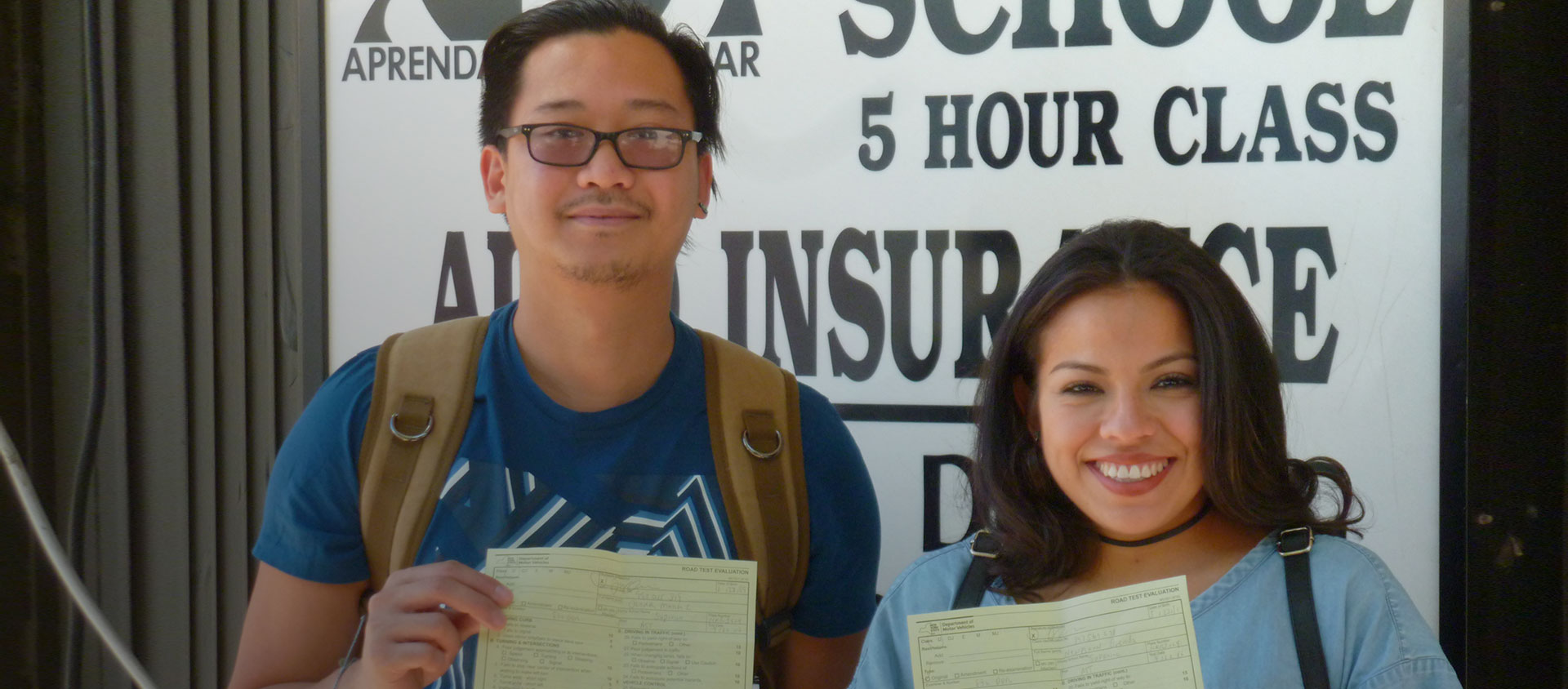
Passing your road test in New York is a monumental achievement. The feeling of accomplishment after the examiner tells you that you’ve passed is a moment you will not soon forget. It marks the culmination of hours of practice, studying the rules of the road, and mastering essential maneuvers. But after the initial celebration, a common question arises: “Now what?” The journey to becoming a fully licensed driver doesn’t end with the road test. There are several important steps to take and new responsibilities to understand.
This comprehensive guide will walk you through everything you need to do after passing your New York State road test. We’ll cover how to get your official driver’s license, the specific restrictions that apply to new drivers, and crucial tips for building confidence and staying safe on the road. For new drivers, the learning process continues long after the test is over. That’s why services like refresher driving lessons and specialized courses are so valuable. Let’s navigate the road ahead together, ensuring your transition from a permit holder to a licensed driver is smooth, safe, and successful.
From Passed Test to Official License: The Next Steps
You’ve passed the test and received your interim license from the examiner. This piece of paper is your temporary ticket to freedom, but it’s not the final step. Here’s a breakdown of what happens next and how you will receive your permanent driver’s license.
Your Interim License: What It Is and How to Use It
Immediately after passing your road test, the DMV examiner will congratulate you and issue an interim driver’s license. This is typically a paper document that serves as your temporary, fully valid license until your permanent photo license arrives in the mail.
Here’s what you need to know about your interim license:
- It’s a Legal License: The interim license grants you full driving privileges according to your license class (typically Class D for passenger vehicles). You can drive unsupervised, provided you follow all traffic laws.
- Carry It With Your Photo ID: Since the interim license is a paper document without a photo, you must carry it along with your photo learner permit. The combination of these two documents proves your identity and your legal right to drive. Do not discard your learner permit until your new photo license arrives.
- Validity Period: The interim license is valid for 90 days. This gives the DMV ample time to process your information and mail your permanent license. You should receive your new license well before the interim one expires.
If for some reason your photo license does not arrive within 60 days, it is a good idea to contact the DMV to check on its status. You don’t want to be caught with an expired interim license.
Receiving Your Permanent Photo Driver’s License
The New York State DMV will automatically process and mail your new photo driver’s license to the address they have on file. There are no additional forms to fill out or fees to pay at this point, as you paid for the license when you first applied for your learner permit.
The new license will typically arrive in the mail in about two weeks. Once you receive your new photo license, you can stop carrying the interim paper license and your old learner permit. Your new license is the only document you’ll need.
Before putting your new license in your wallet, take a moment to review it carefully. Ensure all the information is correct, including your name, address, and date of birth. If you spot any errors, you should contact us at the DMV immediately to get it corrected. An incorrect license can cause significant problems down the line.
Understanding New Driver Restrictions in NYS
Earning your driver’s license grants you incredible freedom, but it also comes with immense responsibility. To help ease new drivers into this responsibility, New York State has a Graduated Driver Licensing (GDL) law. This law places certain restrictions on junior license holders (drivers under the age of 18). It is crucial to understand and follow these rules to the letter, as violations can lead to license suspension or revocation.
Even if you are 18 or older and receive a senior license, understanding the principles behind these restrictions can help you make safer choices during your first year of driving.
Junior License (Class DJ) Restrictions
If you are 17 years old when you pass your road test, you will be issued a junior license. The restrictions depend on the region of New York where you are driving.
Driving in Upstate NY (All counties except NYC and Long Island):
- Driving Unsupervised: You may drive unsupervised between 5 AM and 9 PM.
- Driving with Supervision: Between 9 PM and 5 AM, you may only drive under the supervision of a licensed parent, guardian, or a driving instructor.
- Passenger Rules: For the first six months after receiving your junior license, you can have only one passenger under the age of 21 in the vehicle with you, unless they are immediate family members. After the first six months, this restriction is lifted.
Driving on Long Island (Nassau and Suffolk Counties):
- Driving Unsupervised: You are not permitted to drive unsupervised at any time. You must always be accompanied by a licensed parent, guardian, or driving instructor. The only exceptions are for driving directly to and from work or a state-approved course.
- Passenger Rules: The same passenger rule applies: only one non-family passenger under 21 for the first six months.
Driving in New York City (The Five Boroughs):
- Driving Unsupervised: Driving with a junior license in any of the five boroughs of NYC is strictly prohibited under any circumstances.
These rules are designed to limit high-risk driving situations for the most inexperienced drivers, such as driving at night or with distracting peers.
Transitioning to a Senior License (Class D)
The goal for every junior driver is to earn their senior driver’s license. This happens automatically on your 18th birthday. Your junior license becomes a full senior license with no additional tests or paperwork required.
However, you can obtain a senior license at age 17 if you complete a state-approved driver education course (often offered through high schools or colleges). Upon presenting your driver education completion certificate (Form MV-285) to the DMV, your junior license will be upgraded to a senior license, and the GDL restrictions will be lifted. This is a powerful incentive to complete a formal driver education program.
Building Confidence and Staying Safe: Tips for New Drivers
Passing the road test proves you have the basic skills to operate a vehicle safely. However, real-world driving presents countless scenarios that you couldn’t possibly cover in your driving lessons. Your first year as a licensed driver is a critical period for developing good habits and gaining true confidence behind the wheel.
Practice, Practice, Practice
The single best way to become a better driver is to drive. But it’s about the quality of the practice, not just the quantity.
- Start in Familiar Areas: In your first few weeks, stick to roads you know well. Drive around your neighborhood, to the local grocery store, or to school. This allows you to focus on your driving technique without the added stress of navigating unfamiliar territory.
- Vary Your Driving Conditions: As you get more comfortable, gradually expose yourself to different conditions. Drive during the day, at night, in sunny weather, and in the rain. Each condition presents unique challenges that will sharpen your skills.
- Experience Different Road Types: Don’t just stick to local streets. Practice driving on busier multi-lane roads, highways, and in areas with heavy pedestrian traffic. Learning to merge, change lanes confidently, and anticipate the actions of others is crucial.
Master Defensive Driving from Day One
Defensive driving is the practice of anticipating potential hazards and taking proactive steps to avoid them. It’s about more than just following the rules; it’s about protecting yourself from the mistakes of other drivers.
Consider enrolling in a defensive driving course. While many take this course for insurance or point reduction benefits, the core lessons are invaluable for new drivers. At Superior Driving School, our six-hour course is designed to be engaging and practical. You will learn techniques for:
- Managing visibility, time, and space around your vehicle.
- Scanning the road ahead to identify potential conflicts early.
- Understanding and avoiding common collision traps.
- Controlling your emotions and avoiding aggressive driving behaviors.
Completing this course not only makes you a safer driver but also comes with a mandatory 10% discount on your car insurance for three years—a fantastic benefit for new drivers who often face the highest premiums.
Consider Refresher Lessons
Did you struggle with parallel parking during your training? Are you nervous about merging onto the expressway? Passing your road test doesn’t mean your training has to end. A refresher lesson can be a fantastic investment in your confidence and safety.
Many of our students, even after getting their license, come back for a brush-up lesson or two. Our instructors can provide targeted, one-on-one coaching on any specific skill you want to improve. Whether it’s perfecting your three-point turn or getting comfortable with highway speeds, a single lesson can make a world of difference. Our testimonials from former students often highlight how patient and effective our instructors are in building lasting confidence.
The No-Distraction Rule
Distracted driving is a leading cause of accidents, especially among new drivers. Make a firm commitment to yourself to eliminate distractions every time you get behind the wheel.
- Put Your Phone Away: The most dangerous distraction is your cell phone. Do not text, call, or browse social media while driving. Put your phone on silent and place it somewhere out of reach, like in the glove compartment or the back seat.
- Set Everything Before You Go: Adjust your mirrors, set your GPS, choose your music playlist, and finish any food or drinks before you put the car in drive.
- Limit Passengers: As a new driver, a car full of friends can be incredibly distracting. Follow the passenger restrictions if you have a junior license, and even if you have a senior license, be mindful of how passengers affect your focus.
Your Journey as a Licensed Driver Starts Now
Passing your road test is the beginning, not the end, of your driving education. The freedom you’ve earned comes with the profound responsibility to keep yourself, your passengers, and everyone else on the road safe. By understanding the administrative steps that follow your test, adhering to the restrictions for new drivers, and committing to continuous improvement, you can build a foundation for a lifetime of safe driving.
Remember that resources are available to help you on this journey. Whether you’re a brand-new driver looking to gain confidence on the highway or want to take advantage of the insurance savings from a defensive driving course, Superior Driving School is here to support you. We offer everything from the mandatory 5-hour pre-licensing class for beginners to advanced lessons for licensed drivers.
Embrace this new chapter with excitement and a healthy respect for the road. Practice diligently, drive defensively, and never stop learning. If you have any questions or want to book a refresher lesson to sharpen your skills, don’t hesitate to contact us. We are passionate about helping our students become the most confident and capable drivers they can be.
Learn to Drive with Superior Driving School
We believe these lessons can last a lifetime and know they result in safer roads and save lives! We have been a trusted Queens NY driving school for more than two decades!
Contact Us