For anyone aspiring to drive in New York State, the journey begins long before you get behind the wheel by yourself. It’s a structured path that starts with a learner’s permit and culminates in earning a driver’s license. While both are crucial documents issued by the DMV, they serve very different purposes and come with distinct sets of rules and responsibilities. Understanding the difference between a learner’s permit and a driver’s license is the first step toward navigating the process successfully.
A learner’s permit is your key to practicing, a tool for learning under supervision. A driver’s license, on the other hand, is the official credential that grants you the freedom to drive independently. This guide will provide a detailed comparison of these two essential documents. We will explore their unique purposes, the specific restrictions and requirements for each, and the step-by-step process of transitioning from one to the other. With a clear understanding of this framework, you can confidently work your way toward becoming a licensed driver.
What is a Learner’s Permit? The First Step to Driving
A learner’s permit is an entry-level credential that allows you to begin your practical, on-road driving education. It is not a license to drive freely; rather, it is a license to learn. The entire purpose of the permit is to give you the legal authority to operate a motor vehicle under specific, controlled conditions so you can gain the necessary experience to become a safe driver.
Purpose and Function of a Learner’s Permit
The primary function of a learner’s permit is to facilitate supervised driving practice. It acknowledges that you have passed a basic knowledge test on traffic laws and road signs but have not yet demonstrated the practical skills needed for safe independent driving. It serves as a bridge between knowing the rules and applying them in real-world scenarios.
Think of it as the academic phase of your driving education. You’ve read the textbook (the NYS Driver’s Manual) and passed the initial quiz (the permit test). Now, the permit allows you to enter the laboratory (the car) with a qualified instructor (your supervising driver) to conduct your experiments and build your skills.
How to Obtain a Learner’s Permit in NYS
Getting your learner’s permit is the first major milestone in your driving journey. To be eligible, you must be at least 16 years old. The process involves a trip to a DMV office with the proper documentation and passing two key tests.
- Gather Your Documents: You must prove your identity and age using the DMV’s 6-point ID system. This typically requires a combination of documents like a birth certificate, Social Security card, and passport. You will also need to provide proof of residency.
- Pass the Vision Test: A basic vision screening is conducted at the DMV to ensure you meet the minimum vision standards for safe driving.
- Pass the Written Test: This is a 20-question multiple-choice test on traffic laws, road signs, and safe driving practices. You must answer at least 14 questions correctly, including at least two of the four road sign questions.
Once you pass these tests and pay the required fees, you’ll be issued a temporary paper permit, with your official photo permit arriving in the mail.
Strict Restrictions and Limitations of a Permit
The freedom granted by a learner’s permit is heavily restricted to ensure the safety of the student driver and the public. These restrictions are the most significant difference between a permit and a license.
- Mandatory Supervision: The cardinal rule of a learner’s permit is that you can never drive alone. You must always have a supervising driver in the front passenger seat. This supervisor must be at least 21 years old and hold a valid license for the type of vehicle you are driving.
- Regional and Time-Based Restrictions: New York’s Graduated Driver Licensing (GDL) laws impose further restrictions, especially for drivers under 18.
- Upstate NY: You can practice driving between 5 AM and 9 PM.
- Long Island & NYC: The rules are much stricter. On Long Island, you can only drive under the supervision of a licensed parent, guardian, or professional driving instructor. In NYC, practice is limited to driving with a certified driving instructor only during specific hours.
- Passenger Limitations: The number of passengers is limited by the number of seat belts in the vehicle, and all occupants must be properly restrained.
These rules are not suggestions; they are the law. Violating them can result in fines and a delay in your ability to get a driver’s license.
What is a Driver’s License? The Credential for Independence
A driver’s license is the official document that certifies you have met all the state’s requirements and are deemed competent to operate a motor vehicle on public roads without supervision. It represents the successful completion of your training and testing, granting you the full rights and responsibilities of a licensed driver.
Purpose and Function of a Driver’s License
The purpose of a driver’s license is to grant legal permission for independent driving. It is a statement from the state that you have demonstrated sufficient knowledge of the law and practical skill behind the wheel. Unlike a permit, which is for learning, a license is for doing.
It serves as:
- Proof of Driving Privilege: It is the official document you must carry to prove you are legally allowed to drive.
- A Primary Form of Identification: A driver’s license is a universally accepted photo ID for various purposes, from banking to travel.
- A Record of Your Driving History: The license is linked to your driving record, which tracks violations and other driving-related information.
The Path from Permit to License
Transitioning from a learner’s permit to a driver’s license involves a structured process designed to build skill and ensure readiness.
- Complete the 5-Hour Pre-Licensing Class: This mandatory course is a prerequisite for scheduling your road test. It covers crucial topics on driver attitudes, behaviors, and the consequences of risky choices. At Superior Driving School, we offer this class conveniently through an interactive live Zoom session, making it easy to fulfill this requirement from home.
- Gain Sufficient Driving Practice: The state recommends a minimum of 50 hours of supervised practice, with at least 15 of those hours at night and 10 in moderate to heavy traffic. This is where professional driving lessons become invaluable. An instructor can provide structured training that a parent cannot, teaching proper techniques and preparing you specifically for the road test.
- Pass the Road Test: This is the final exam. A DMV examiner will evaluate your ability to safely control the vehicle and follow traffic laws in a real-world setting. You will be tested on skills like turning, parking, and maintaining lane position.
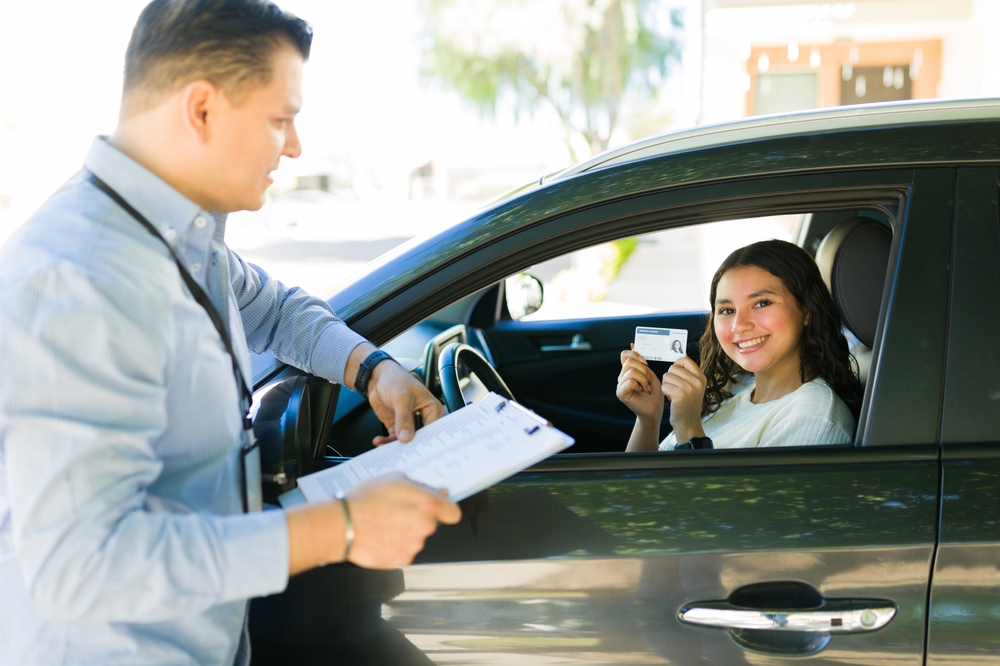
Once you pass the road test, you receive an interim license on the spot, and your official photo driver’s license arrives in the mail.
Privileges and Responsibilities of a Licensed Driver
Holding a driver’s license opens up a world of freedom, but that freedom comes with significant responsibilities.
- Driving Unsupervised: This is the biggest privilege. You can drive alone, at any time of day (subject to junior license restrictions if under 18), without a supervising driver.
- Legal Responsibility: You are solely responsible for your actions behind the wheel. If you are in an accident or commit a violation, you are held accountable.
- Junior License Restrictions (Under 18): If you get your license at 16 or 17, you will initially have a junior license (Class DJ) with certain GDL restrictions on nighttime driving and the number of young passengers you can carry. These restrictions are automatically lifted when you turn 18.
- Maintaining a Clean Record: As a licensed driver, it’s crucial to avoid traffic violations. Accumulating points on your license can lead to fines, insurance increases, and even suspension. Completing a defensive driving course is an excellent way for licensed drivers to reinforce good habits, reduce points, and earn a 10% insurance discount.
Key Differences at a Glance: Permit vs. License
| Feature | Learner’s Permit | Driver’s License |
| Primary Purpose | To learn how to drive under supervision. | To legally operate a motor vehicle independently. |
| Supervision | Mandatory. A supervising driver (age 21+) must always be in the front seat. | Not required. You can drive alone. |
| How to Obtain | Pass a written knowledge test and a vision test at the DMV. | Complete a 5-hour class, gain supervised practice, and pass a final road test. |
| Restrictions | Strict limitations on driving hours, locations, and passengers, especially for those under 18. | Fewer restrictions. Junior license holders (under 18) have nighttime and passenger limits. |
| Driving Privileges | Limited to practice sessions only. | Full driving privileges according to the license class. |
| Function as ID | Not a standalone photo ID. Must be accompanied by another form of photo identification. | A primary, government-issued photo ID. |
Your Partner in the Transition: Superior Driving School
The journey from permit holder to licensed driver is a significant undertaking. Superior Driving School is dedicated to making this transition as smooth, safe, and successful as possible. Our comprehensive services are designed to support you at every stage.
Our patient, professional instructors provide top-tier driving lessons that go beyond just teaching you to pass the test. They build a foundation of confidence and skill that will last a lifetime. As our student testimonials show, our instructors are experts at turning nervous beginners into capable drivers. We offer packages for all needs, from a full beginner’s course to refresher lessons focused on specific skills like parallel parking.
We simplify the mandatory requirements with our engaging and convenient online 5-hour pre-licensing class. And once you have your license, we’re still here to help you become an even better driver with our defensive driving course, which helps you stay safe and save money on insurance.
The distinction between a learner’s permit and a driver’s license is clear: one is for learning, the other is for living. The permit is a temporary key that unlocks the practice field, while the license is the permanent key to the open road. Navigating the path from one to the other requires knowledge, practice, and a commitment to safety.
If you are ready to begin your journey or need expert guidance along the way, contact us. We have the tools, the expertise, and the dedication to help you not just get your license, but become a great driver.
Learn to Drive with Superior Driving School
We believe these lessons can last a lifetime and know they result in safer roads and save lives! We have been a trusted Queens NY driving school for more than two decades!
Contact Us