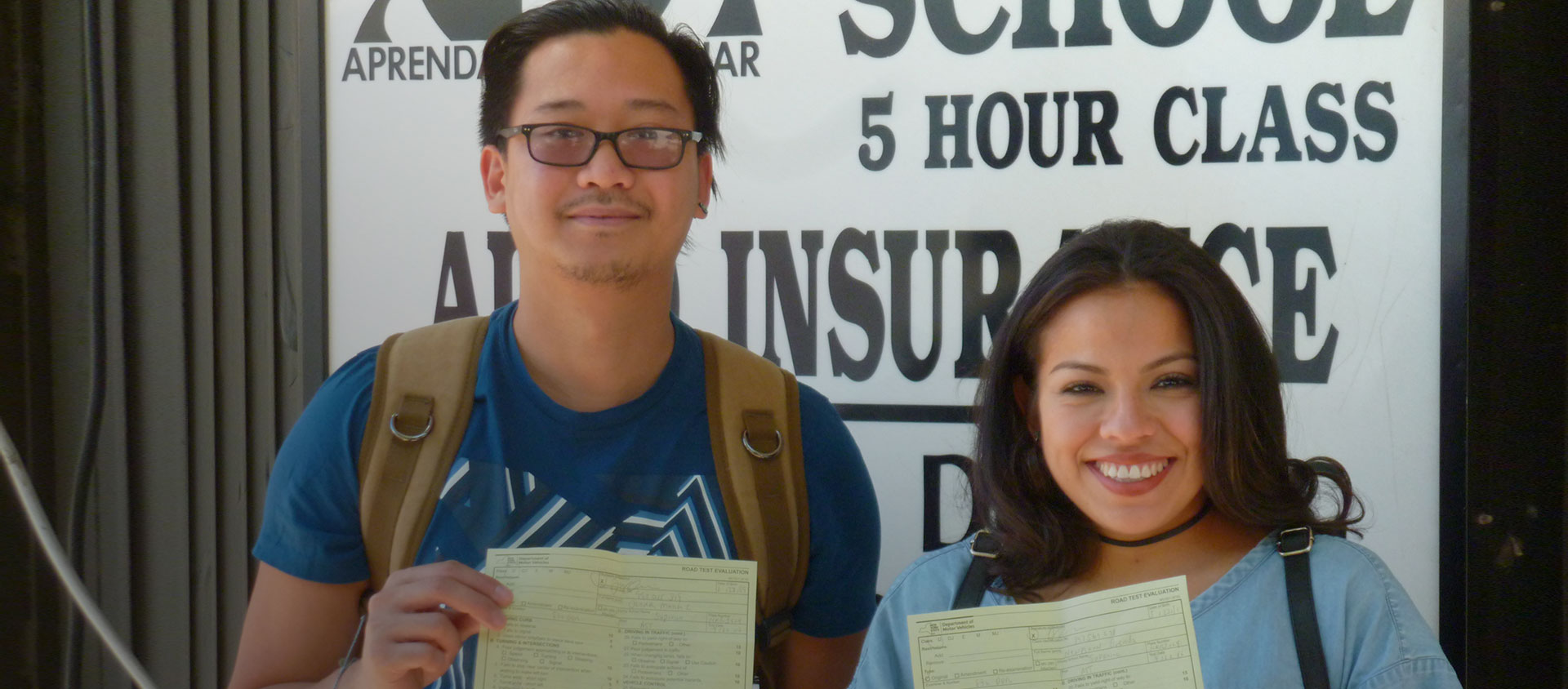

Getting behind the wheel for the first time is a major life milestone. It’s a mix of excitement, freedom, and, let’s be honest, a little bit of nervousness. That’s completely normal. Every confident driver you see on the road today was once a beginner, feeling the exact same way you do. The key to transforming that anxiety into confidence is preparation. Knowing what to expect and understanding some fundamental principles before your first official lesson can make all the difference.
This guide is designed to give you a solid foundation before you even turn the key. We will walk through ten essential things every new driver should know. From getting familiar with your car’s controls to understanding the mindset of a safe driver, these tips will help you feel more prepared and less overwhelmed. By the end, you’ll have the knowledge to start your driving journey on the right foot, ready to make the most of your professional driving lessons.
1. Get to Know the Cockpit: Your Vehicle’s Controls
Before you can command a vehicle, you need to speak its language. The “cockpit” of a car can seem intimidating with its array of buttons, levers, and lights. Taking the time to familiarize yourself with these controls in a stationary car is one of the most empowering things you can do. It removes a layer of mystery and allows you to focus on the road when you start moving.
Basic Instrument Panel and Gauges
Your dashboard is your car’s communication center. It provides real-time information about the vehicle’s status. Sit in the driver’s seat (with the car off) and locate these key instruments:
- Speedometer: This is the most prominent gauge, showing your current speed in miles per hour (MPH) and kilometers per hour (km/h).
- Tachometer: This measures the engine’s speed in revolutions per minute (RPM). While more critical for manual transmissions, it’s good to know that pushing the engine into the red zone is not ideal.
- Fuel Gauge: This shows how much fuel is left in the tank. Always know where “E” (Empty) and “F” (Full) are, and make it a habit to refuel before the needle gets dangerously low.
- Temperature Gauge: This monitors the engine’s coolant temperature. If it ever creeps into the red or “H” (Hot) zone, you should pull over safely and turn off the engine to prevent damage.
- Warning Lights: These small icons (e.g., check engine, battery, oil pressure) illuminate when the car’s computer detects a problem. Familiarize yourself with the most common ones in the owner’s manual.
Essential Controls and Levers
Next, let’s identify the controls you will actively use while driving.
- Ignition: Where you insert the key or press a button to start the car.
- Gear Selector (PRNDL): In an automatic car, this lever selects the gear. You’ll primarily use Park (P), Reverse (R), Neutral (N), and Drive (D).
- Steering Wheel: Used to direct the car. We’ll cover how to use it properly later. It also houses the horn and often controls for the cruise control and audio system.
- Pedals: In an automatic, you have two: the accelerator (gas) on the right and the brake on the left. Always use only your right foot for both pedals. This prevents accidentally pressing both at the same time.
- Turn Signal Lever: Usually on the left side of the steering column. Push it up for a right turn and down for a left turn. This lever also often controls your headlights and high beams.
- Windshield Wipers: Typically on the right side of the steering column. It has various settings for different levels of rain.
- Parking Brake: This can be a hand lever in the center console, a third pedal to the far left, or an electronic button. It secures the car when parked.
Spending just 15-20 minutes sitting in the car and touching each of these controls will build muscle memory and confidence before your first lesson begins.
2. Adjust for Safety and Comfort: The Perfect Seating Position
Your driving position isn’t just about comfort; it’s a critical safety component. A proper setup ensures you have maximum control over the vehicle and optimal visibility. Before you start the engine, you should always perform a “cockpit drill” to adjust your seat, mirrors, and steering wheel.
Finding Your Ideal Seat Position
Your seat should be positioned to allow you to operate the pedals and steering wheel without straining or reaching.
- Seat Height: Adjust the seat vertically so your eyes are at least halfway up the windshield. This gives you a clear view of the road ahead. You should be able to see the road, not just the car’s hood.
- Distance from Pedals: Slide your seat forward or backward so that when you press the brake pedal fully to the floor, your knee remains slightly bent. A straight leg reduces your ability to apply maximum force in an emergency, while a knee that’s too bent can be uncomfortable and limit your movement.
- Seatback Angle: Adjust the backrest to an upright position, around 90-100 degrees. Your shoulders should be able to rest against the seatback even when your hands are on the steering wheel. Reclining too much reduces control and can be dangerous.
Setting Your Mirrors
Mirrors are your eyes for the back and sides of the vehicle. They help you see what’s happening in your blind spots and behind you.
- Rearview Mirror: Adjust it so you can see the entire rear window from your normal seating position. You should be able to get a full view with just a quick glance.
- Side Mirrors: These are for seeing into the lanes next to you. A modern approach is to set them so you can just barely see the side of your own car. This minimizes the blind spot directly next to your vehicle. To set the driver’s side mirror, lean your head against the window and adjust the mirror until you can just see the side of your car. For the passenger side, lean toward the center of the car and do the same.
Steering Wheel Adjustment
Most modern cars allow you to adjust the steering wheel’s height and sometimes its distance from you. Position it so that your hands can comfortably hold the “9 and 3” position and you have a clear view of the instrument panel. Your arms should be bent, not locked straight.
3. The “9 and 3” Rule: Proper Hand Position
How you hold the steering wheel directly impacts your ability to control the car smoothly and react quickly in an emergency. The long-standing advice has been to place your hands at the “10 and 2” positions, imagining the wheel as a clock face. However, modern safety experts and driving instructors now recommend the “9 and 3” position.
Why “9 and 3” is the New Standard
There are several important reasons for this change, primarily related to modern vehicle safety systems.
- Airbag Safety: In the event of a collision, the driver-side airbag deploys from the center of the steering wheel with incredible force. The “10 and 2” position places your hands and arms directly in the path of the deploying airbag, which can cause serious injuries. The “9 and 3” position keeps your arms out of the main deployment zone.
- Better Control: Holding the wheel at “9 and 3” provides a more stable and balanced grip. It gives you the best leverage for making smooth turns and quick, evasive maneuvers. Your body is more symmetrical, which translates to more precise steering input.
- Reduced Fatigue: This position is more ergonomic and allows your arms to be more relaxed. Over long drives, this can significantly reduce shoulder and neck fatigue.
Keep a light but firm grip. A “death grip” on the wheel will tire you out and can make your steering inputs jerky. Your thumbs should rest along the rim of the wheel, not wrapped around it, to further protect them during airbag deployment.
4. Master the Turn: The Hand-Over-Hand Steering Technique
Once you have the correct hand position, the next step is learning how to turn the wheel effectively. For sharp turns, like those at intersections or when parking, you’ll need to turn the wheel more than a simple shuffle of the hands will allow. This is where the hand-over-hand steering method comes in. It’s a fundamental skill taught in our Beginner Driving Course.
How to Execute Hand-Over-Hand Steering
Let’s break down the process for a right turn:
- Initiate the Turn: With your hands at “9 and 3,” begin the turn by pushing up with your left hand.
- Cross Over: As your left hand reaches the “12 o’clock” position, your right hand should release its grip and cross over your left arm to grasp the wheel on the other side, perhaps around the “10 or 11 o’clock” position.
- Pull Down: Your right hand now pulls the wheel down, continuing the turn. As it does, your left hand releases, moves back to its original “9 o’clock” area, and prepares to repeat the process if a sharper turn is needed.
- Straighten Out: To straighten the wheel, you simply reverse the motion. Allow the wheel to slide through your hands in a controlled manner, or use the same hand-over-hand technique in reverse to bring it back to center more quickly.
This technique ensures that you always have a hand in a position of control and can make smooth, continuous turns without fumbling. It may feel awkward at first, but practice will make it second nature. Many students who have mastered this technique share their positive experiences in our testimonials.
5. Look Where You Want to Go: The Power of Visual Tracking
This might be the single most important concept in all of driving: Your car goes where your eyes go. This principle is known as visual tracking. New drivers often make the mistake of looking at the road directly in front of the car’s hood. This is like trying to walk by only looking at your feet—it’s disorienting and you can’t see obstacles until it’s too late.
The Importance of a Long-Range View
To drive safely and smoothly, you need to lift your gaze and look far down the road toward your intended destination.
- Anticipation: Looking 12-15 seconds ahead (about one city block) gives your brain time to process information and anticipate potential hazards. You’ll see a red light, a slow-moving truck, or a pedestrian long before you reach them, giving you ample time to react smoothly.
- Staying Centered: If you find yourself drifting in your lane, it’s almost certainly because you’re not looking far enough ahead. When you focus on the center of your intended path far in the distance, your brain will automatically make the tiny steering corrections needed to keep you on track. This is a core part of learning to manage your space on the road.
- Target Fixation: The flip side of this principle is a dangerous phenomenon called target fixation. If you stare at a hazard (like a pothole or a guardrail), you will instinctively steer directly toward it. The trick is to acknowledge the hazard and then immediately shift your focus to the safe path around it. Look at the solution, not the problem.
During your driving lessons, your instructor will constantly remind you to keep your “eyes up.” It’s a skill that requires conscious effort to develop, but it is the bedrock of all advanced driving techniques, including defensive driving.
6. Smoothness is Key: The Art of Acceleration and Braking
Driving is not an on/off switch. Smooth acceleration and braking are hallmarks of a skilled driver. They are not only more comfortable for you and your passengers but also safer and more fuel-efficient. The key is to imagine there’s an open cup of coffee on your dashboard that you don’t want to spill.
Gentle on the Gas
The accelerator is highly sensitive. A common beginner mistake is to stomp on the gas, causing the car to lurch forward. Instead, apply gentle, steady pressure.
- Squeeze, Don’t Stomp: Think of squeezing a sponge rather than stomping a bug. Rest your heel on the floor and use your ankle to pivot your foot onto the pedal, applying gradual pressure with your toes.
- Feel the Momentum: Pay attention to how the car responds. You don’t need to push the pedal far to get the car moving. Once you’re at your desired speed, you can ease off the pedal slightly to maintain it.
Progressive Braking
Just like with the accelerator, avoid slamming on the brakes unless it’s an absolute emergency. The goal is to slow the car down smoothly and predictably.
- Look Ahead: Effective braking starts with good visual tracking. By seeing a stop sign or red light far in advance, you can begin to slow down much earlier.
- Cover the Brake: In situations where you might need to stop suddenly (like in heavy traffic or near a crosswalk), take your foot off the accelerator and “cover” the brake pedal without pressing it. This reduces your reaction time significantly.
- Apply Gradual Pressure: Start with light pressure on the brake pedal and progressively increase it as you get closer to your stopping point. Just before you come to a complete stop, slightly release some of the pressure. This will prevent the car from jerking to a halt.
Mastering smooth pedal control will make you a more predictable and safer driver for everyone on the road.
7. Understand the Rules Before You Play the Game
Driving is a team sport governed by a strict set of rules. You wouldn’t play a game without knowing the rules, and you shouldn’t drive without understanding the basic laws of the road. While your driving instructor will cover these, having a head start is incredibly beneficial.
Essential Knowledge for New York Drivers
Before you get in the car, you should have a basic understanding of:
- Traffic Signs and Signals: Know the difference between regulatory signs (like Speed Limit or Stop signs), warning signs (like Sharp Curve Ahead), and guide signs (like highway markers).
- Right-of-Way: Who goes first at a four-way stop? When can you turn right on red? Understanding right-of-way rules is crucial for navigating intersections safely.
- Speed Limits: Know the default speed limits in your area (e.g., in a city, on a highway) and always be aware of the posted speed limit.
- Following Distance: The “three-second rule” is a good minimum. When the car in front of you passes a fixed object (like a sign), it should take you at least three seconds to reach that same object. Increase this distance in bad weather.
In New York, all new drivers must complete a 5-hour pre-licensing class. This course is specifically designed to cover these critical rules, the dangers of impaired driving, and other essential topics before you can even schedule your road test. Attending this class, now available online, is a mandatory and invaluable step in your education.
8. Communication is Not Optional
Driving is a constant act of communication. You can’t talk to other drivers, so you have to use your vehicle’s signals to communicate your intentions. Failing to do so is not just rude; it’s dangerous and a common cause of collisions.
Your Car’s Communication Tools
- Turn Signals: Your most important communication tool. Signal well in advance of any turn or lane change—at least 100 feet before. This gives other drivers time to react to what you’re about to do. Signal even if you don’t see anyone else around; it’s the car you don’t see that poses the greatest risk.
- Brake Lights: These automatically tell drivers behind you that you are slowing down or stopping. This is why smooth, early braking is so important—it gives them more warning.
- Horn: Use your horn sparingly. A quick tap can be useful to get another driver’s attention if they don’t see you or are drifting into your lane. A long blast is for emergencies only.
- Headlights: Turn on your headlights not just to see, but to be seen. Use them at dawn, at dusk, during rain or fog, and anytime visibility is poor.
Being a predictable driver is being a safe driver. Clear and early communication is the best way to ensure others on the road know what you’re planning to do.
9. Embrace the Learning Mindset
Your first driving lesson is not a test. It is the very beginning of a long learning process. No one expects you to be perfect. Your instructor is a trained professional whose job is to guide you, correct you, and build your skills from the ground up.
- It’s Okay to Be Nervous: Acknowledge your nerves, but don’t let them paralyze you. Your instructor has taught hundreds, if not thousands, of nervous beginners. They know how to create a calm and supportive learning environment.
- Ask Questions: If you don’t understand something, ask! Whether it’s about a road sign, a maneuver, or a decision the instructor made, clarification is key to learning. There are no stupid questions when it comes to safety.
- Expect to Make Mistakes: You will stall. You will take a turn too wide. You will brake too hard. Every driver has made these mistakes. The important thing is to listen to your instructor’s feedback, learn from the error, and try again. Each mistake is a learning opportunity.
- Trust Your Instructor: The training cars used for lessons are equipped with a brake on the instructor’s side. They are your safety net. Trust that they will not put you in a situation you can’t handle and that they can intervene if necessary.
Many of our former students mention in their testimonials how the patience and encouragement of their instructors made all the difference. Go into your lesson with an open mind, ready to listen and learn.
10. Prepare for the Lesson Itself
Finally, let’s talk about the practicalities of showing up for your first lesson. A little preparation can help things go smoothly and let you focus on what’s important: driving.
- Get a Good Night’s Sleep: Driving requires concentration. Arriving tired will hinder your ability to learn and react.
- Wear Appropriate Footwear: Avoid flip-flops, high heels, or heavy boots. Wear comfortable, flat, closed-toe shoes like sneakers that give you a good feel for the pedals.
- Bring Your Learner’s Permit: You cannot legally drive without it. Make sure you have your physical permit with you for every single lesson.
- Wear Glasses or Contacts if Needed: If your permit has a restriction for corrective lenses, you must wear them.
- Arrive Calm and Focused: Take a few deep breaths before your lesson begins. Leave any stress from school or work behind. Your only job for the next 45 minutes is to focus on driving.
By preparing your mind and body, you set yourself up for a productive and positive first experience behind the wheel.
Your Journey Starts Now
Learning to drive is an empowering journey that opens up a new world of independence. The skills you build now will serve you for a lifetime. By understanding your vehicle, adopting a safety-first mindset, and preparing for your first lesson with these ten tips, you are already well on your way to becoming a confident and competent driver.
The road ahead is exciting. Remember that every expert was once a beginner. Be patient with yourself, trust the learning process, and enjoy the ride.
If you’re ready to take the next step and book your first lesson or have more questions, don’t hesitate to contact us. We’re here to help you succeed on the road.
Learn to Drive with Superior Driving School
We believe these lessons can last a lifetime and know they result in safer roads and save lives! We have been a trusted Queens NY driving school for more than two decades!
Contact Us